
Your story deserves a place of its own
A private journal for the two of you. You write today; it hands the day back a year from now, right when it matters.
7 days free to try. Cancel anytime.
Apps coming soon
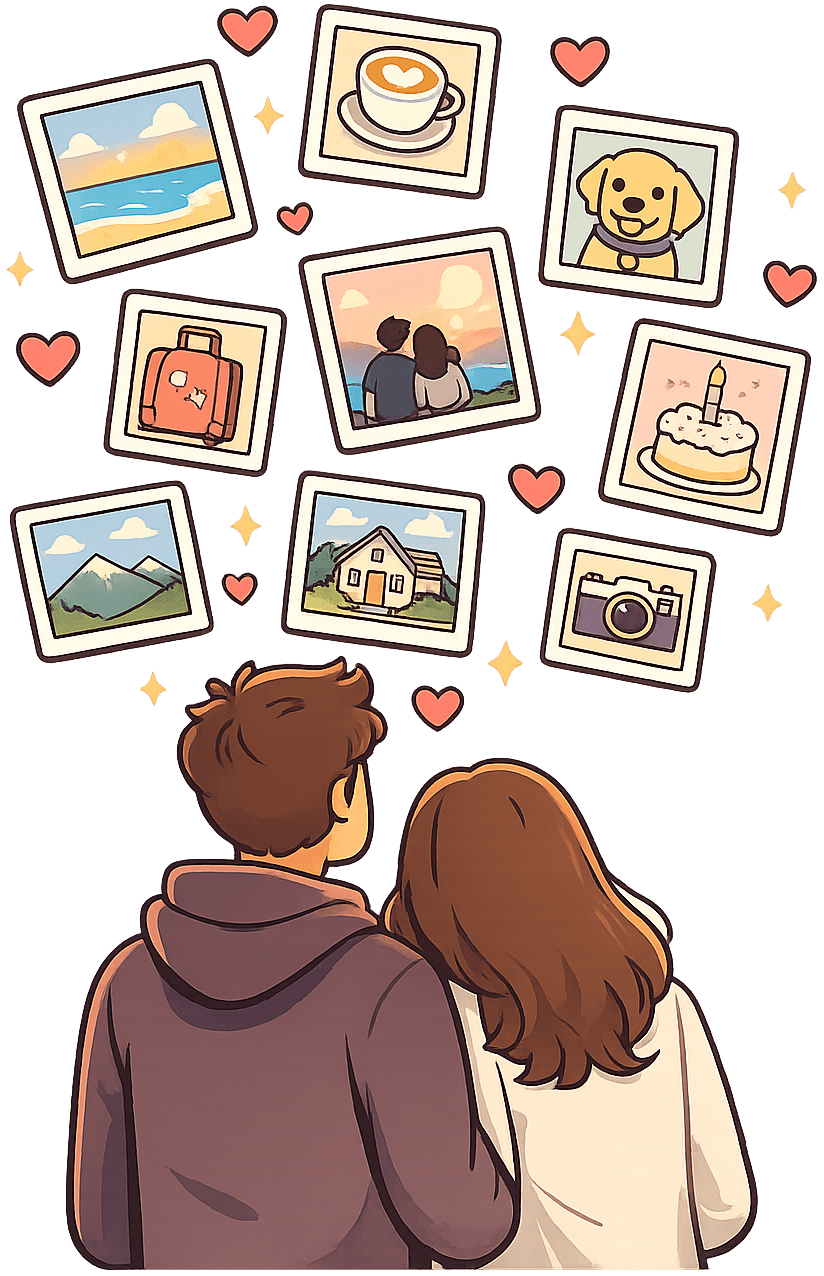
Ten years from now, you won't remember an ordinary Tuesday
And it may have been the exact Tuesday something changed
- The first coffee
- The first trip
- The first apartment
- The first dog
A life is made of small days. And a small day doesn't keep itself — it dissolves into eleven thousand photos in a camera roll nobody will ever scroll back through.
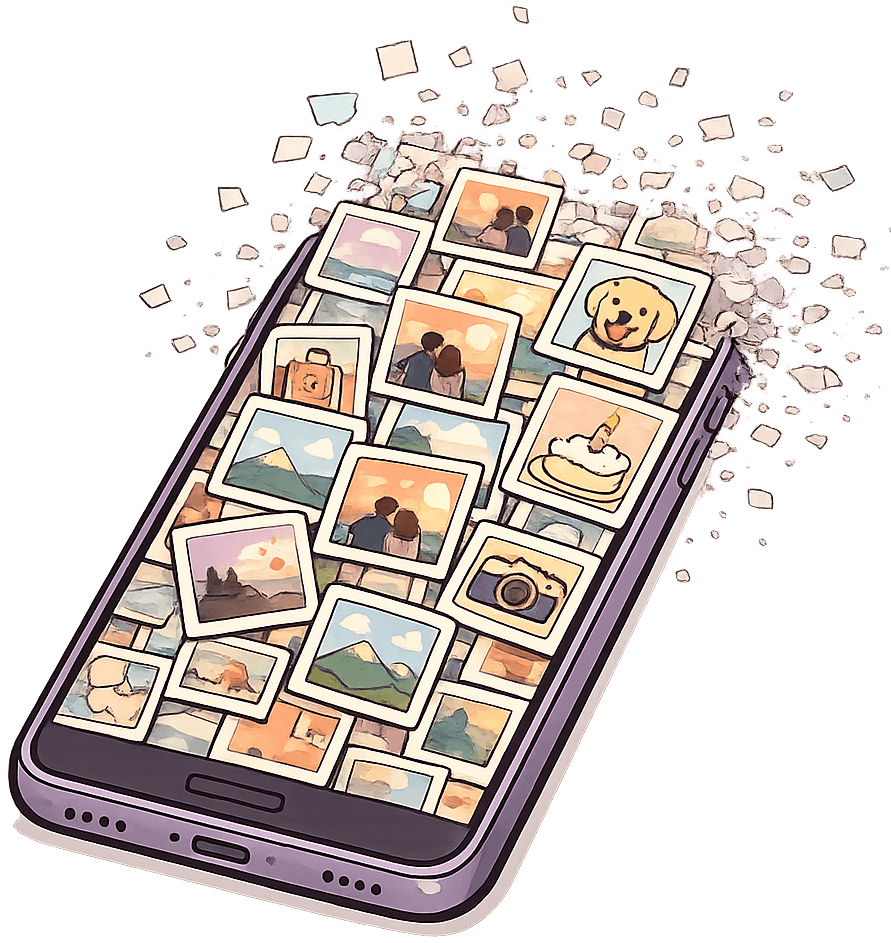
Keeping things is the easy part
Any app keeps. Your phone keeps eleven thousand photos you haven't opened in two years — keeping, on its own, is just forgetting with a backup.
lovnote does the hard part: it gives things back

Remember this?
“Exactly three years ago, you were here.” The memory arrives on its own, on the day it means something
Your numbers
84 days with an entry. 12 different places. The one you kept going back to. Not statistics — the shape of your story.

The month's chapter
AI reads what you wrote and hands the month back as a chapter. It invents nothing: it only uses what is already there.
You don't go looking for the app. It comes looking for you.
Everything you can do

Write
what the two of you put in
The journal
Every moment with up to ten photos, the place and the date. Ten, not three hundred — whoever picks eight photos from the trip picks the good ones.
Question of the day
One question a day, for both of you. Their answer only appears after you write yours — and that rule is enforced by the database, not by the screen.
Time capsule
A letter that only opens on the date you choose. Not even the person who wrote it can open it early.
Dates that matter
Anniversaries, weddings, monthly milestones. The app tells you in advance, on the notice you set.
Plans for two
The trip you're saving for, with how much is in and how much is left
Your own categories
Beyond Story, Plans and Moments, whichever ones you invent

Remember
what it gives back
Remember this?
Every day, a moment you had already forgotten — ideally the one from exactly one, two, three years ago
Your numbers
Days with an entry, longest streak, different places, your fullest month, where you kept going back
The month's chapter
The month you wrote, handed back as a chapter
A letter to the future
A letter written from your own story, to open on a date you choose
Portrait of the two of you
A photo you choose, reimagined in another style
The book of the year
A whole year turning into chapters
AI Lab creations use credits. The subscription comes with 100 a month, nothing runs unless you ask for it, and a chapter costs 3.

Share
what can leave, if you want it to
The year in review
Six cards ready for Stories, with your numbers for the year
The couples ranking
Optional, and off by default. Whoever writes every day leads. Only first names show.
And nothing else
Apart from those two, and only if you switch them on, nothing leaves lovnote. There is no feed.
At the end of the year, your numbers
Six cards ready for Stories, with what you lived through this year. Numbers only — nothing you wrote appears on them.
And, if you want, a link to send to family and friends. Optional, and you can switch it off whenever.
Just the two of you. And you can check.
- Photos live in private storage, served through signed links that expire. There is no open address for a photo of yours.
- Each couple only ever sees their own rows, and it's the database that guarantees it — not the app screen
- AI only receives text once both of you authorise it, separately. Until then, nothing is sent.
- A photo never goes to the AI on its own: only the one you choose, one at a time
- There is no feed. No followers. No likes.
- Want to leave? In Settings, “Download my data” hands you everything in one file.
That simple
- 1
Create the journal
A name, the day it all started, and the day counter starts running
- 2
Invite the one you love
One link, and you both write in the same place
- 3
Write the story
A little every day. At the end of the year, your review.
Try something before you decide
Two things work right here, with no account: your own day counter, and the 50 questions the product uses
Questions everyone asks
Is what we write really private?
It is. Photos live in private storage and are served through signed links that expire — there is no open address for a photo of yours. And each couple can only read their own rows, a rule enforced by the database rather than by the screen. There is no feed in lovnote: nothing you write appears to anyone else.
Can we create an account already?
You can. Sign-up is open: one of you creates the account, starts the free trial and invites the other through the link.
Will both of us have to pay?
No. The subscription belongs to the journal, not to a person. One of you subscribes and invites the other through the link.
Does the AI read our journal?
Only when both of you authorise it, separately, and only at the moment you ask for a creation. Nothing runs on its own. The text goes to the provider for that single call, and the provider neither stores it nor trains on it. A photo never goes alone: only the one you choose, one at a time.
What if we want to leave? Do we lose everything?
No. Settings has “Download my data”: entries, dates, capsules and goals in a single file, at any time.
Does it work on iPhone and Android?
It does. lovnote is an installable web app — you can add it to the home screen on both and get the reminders for important dates. On iPhone, notifications require it to be installed on the home screen. We're building the native apps and they will arrive on the App Store and Play Store; in the meantime nothing is missing.
Can I start on my own, before my partner joins?
You can. You create the journal, write, and invite whenever you want. When the other person joins, they see what's already there.
What is the AI Lab, and why does it use credits?
It's the things AI makes out of what you wrote: the month's chapter, a letter to the future, a portrait of the two of you, the book of the year. Each costs credits because each costs money to run. The subscription comes with 100 credits a month — a chapter costs 3 — and nothing is generated unless you ask.